What you need to know: David Moerschel has been completely freed! But, his trial Judge, Amit Mehta, included an unconstitutional "Guilt Dicta" in the dismissal order. It is a statement of guilt that could be used against him later. The defense attorneys are asking the court to force the Judge to remove that section in his order to dismiss the case. It violates their "presumption of innocence."
Radical Obama Judge Mehta ‘Reluctantly’ Dismisses Oath Keepers Case With Prejudice – Injects Unconstitutional Guilt Dicta
The Unconstitutional Inclusion
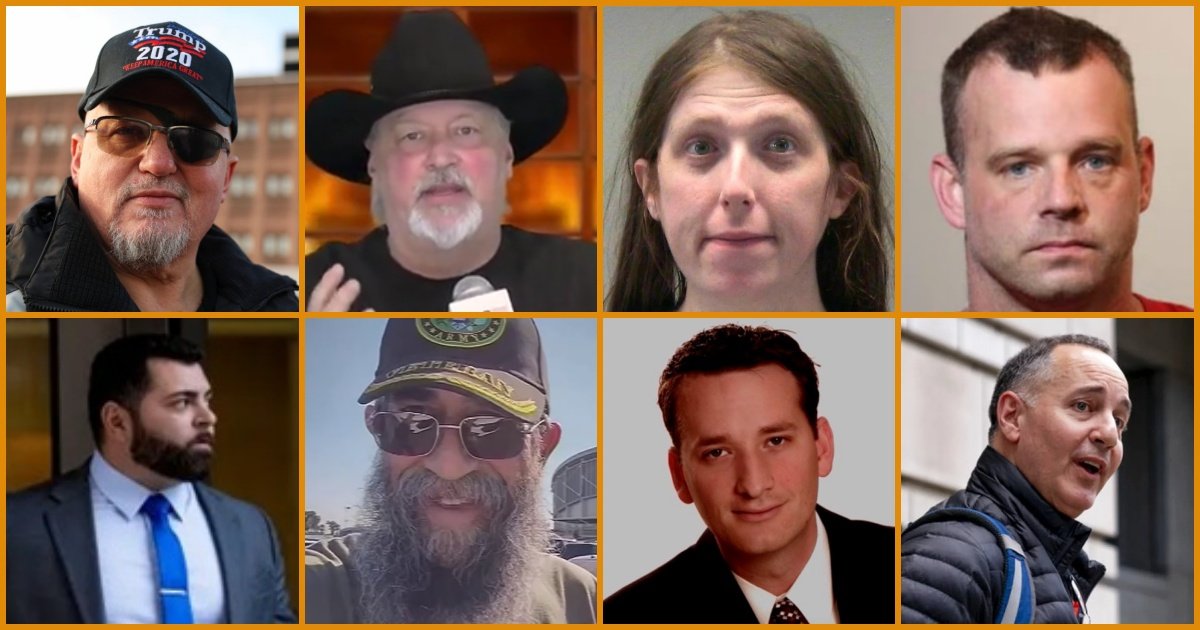
On August 4, 2026, Judge Amit Mehta dismissed the indictment against Stewart Rhodes and seven other Oath Keepers defendants. The dismissal was with prejudice. The case is closed. The men cannot be prosecuted again for these charges. Their rights as citizens, including the right to keep and bear arms, are restored.
The same order declares them guilty.
"Reluctantly, the court grants the motion,"
Judge Mehta wrote in the opening line of his 15-page opinion in United States v. Rhodes, the case that produced the most serious charges of the January 6 prosecutions. Then he spent page after page retelling the government's theory about the case as established fact. (Read the motion here.)
Mehta called the dismissal an "epilogue [that] diminishes the gravity of that day." He wrote that it "bestows upon them unearned grace by wiping their records clean." He lamented that he "cannot write a different ending."
He also wrote four words that capture the whole problem:
"This court does strongly disagree."
The order is a contradiction on the record. The Justice Department moved to dismiss because the convictions no longer stood and continued prosecution served no public interest. Mehta granted the motion because the law gave him no choice. Then he used his final word to put the prosecution's trial narrative into the official record. He quoted the defendants' private messages out of context, including one written by Moerschel, and treated the words as evidence of intent.
Proud Boys Judge Gave a Clean Dismissal
Compare that with what happened in the parallel Proud Boys case. Judge Tim Kelly faced the same request and granted it with a single sentence: "Because the Constitution and Rule 48(a) require it, the Court will grant the Government's motion and dismiss this case with prejudice."
Mehta chose a longer road.

He demanded the government explain itself, citing a 1973 D.C. Circuit case requiring prosecutors to justify dismissals. The government filed a supplement in June. On August 4, Mehta granted the dismissal, acknowledging the "primacy of the Executive Branch in making charging decisions."
Moerschel and the Others Were Not Pardoned
Here is how the eight men got here. President Trump commuted their sentences on January 20, 2025. A commutation is not a pardon. The convictions stayed in place, which meant the eight remained convicted felons long after they left prison. On April 14, 2026, three days before the defendants' appellate briefs were due, the Justice Department moved to vacate the convictions. The D.C. Circuit granted the motion on May 21, 2026, finding vacatur "just under the circumstances." Just like that, Moerschel was no longer a felon. Then the government then moved to dismiss the indictment under Rule 48(a).
The vacatur restored the presumption of innocence. The dismissal ended the case. Between those two events, Mehta wrote his opinion. And in it, he declared in a federal judge's own words that the men were guilty of crimes against the United States. He wrote that
the government "asks to absolve these Defendants of crimes against the United States itself. In this court's view, that is not in the public interest."
They Are Still in the Fight
Edward Vallejo's lawyers did not let it pass. The same day the order was filed, Stephen Sady and Kurt Hermansen moved to strike what they called "unconstitutional dicta" from the opinion. Dicta are a judge's remarks that carry no binding force. They are not the law. But they are on the record, and a judge's words have a way of being quoted back later.
The motion is blunt: "Ed Vallejo was innocent before trial and he is innocent now." It argues the Fifth Amendment's presumption of innocence bars a judge from pronouncing on guilt after the government has dropped the case. The same goes for Moerschel.
It cites the Supreme Court's intervening decisions in Fischer v. United States, Trump v. United States, United States v. Hansen, and Dubin v. United States, rulings that undercut the theories the trial was built on. It points to errors in jury selection and inadmissible hearsay. It invokes Nelson v. Colorado, the 2017 case holding that a person's rights snap back when a conviction falls.
The motion asks Mehta to strike the guilt-presuming passages as advisory opinions that violate the Fifth Amendment. Lawyers for the other defendants are considering joining.
This matters because the civil cases are still alive.

You Thought This Was Over? There Are J6 Civil Suits Pending
Multiple civil lawsuits brought by members of Congress and Capitol Police officers remain pending before Mehta. They name President Trump, the Oath Keepers and Proud Boys organizations, Stewart Rhodes, several co-defendants, and Enrique Tarrio. They allege a conspiracy to "disenfranchise black Americans" and "attack democracy." The cases have been stayed while Trump's claims of privilege and official-acts immunity move through the courts. (Moerschel was named in the D.C. vs Proud Boys, Oath Keepers civil suit. It was thankfully dropped shortly after Trump was inaugurated.)
Stayed is not dismissed. When those cases resume, plaintiffs' lawyers will have a federal judge's written opinion describing these men as guilty of crimes against the country. That is exactly what the dicta provide - de facto evidence against the accused. That is why the motion to strike matters, and why it mattered that it was filed the same day the order came down.
Mehta's Record Suggests Bias
Mehta's record with these defendants is not in dispute. In December 2024 he said from the bench that the notion of Rhodes (founder of the Oath Keepers) being "absolved" was "frightening and ought to be frightening to anyone who cares about democracy in this country." He had previously called Rhodes an "ongoing threat and a peril to this country and its democracy." After Rhodes' sentence was commuted and was released from prison, he visited Capitol Hill to advocate for a fellow prisoner. However, Mehta barred him, Moerschel, and the other Oath Keepers from entering Washington, D.C. The restriction was reversed after the Justice Department objected.
A judge who called a man a peril to democracy now presides over civil cases naming that man as a defendant. The criminal case is closed. The courtroom is not.
For the people who supported these men through the trials and the prison years, the dismissal was the goal. It is real, and it is final. But the judge's parting words gave the other side something to use: a judicial narrative, written in a formal opinion, that the civil plaintiffs can cite. The next phase of the fight is about those words.
David Moerschel knows the difference between a legal victory and a finished fight.

Moerschel's Fight Is Still Not Over
He was one of the eight Oath Keepers singled out for a commutation and not a pardon. He is a surgical neurophysiologist, a man who monitors brains and spinal cords during operations. He spent 19 days loosely affiliated with the Florida Oath Keepers. He was inside the Capitol on January 6 for only 11 minutes and did no damage or violence. The government charged him with seditious conspiracy anyway.
He was sentenced to 3 years, served 288 days in federal prison, 238 days in a halfway house, 206 days of house arrest, and 437 days on an ankle monitor. He lost his job and his day-trading business. Then he lost his dreams of a home. His family was debanked and doxed. They were threatened and given eviction orders. His children learned to hide when someone knocked on the door.
On August 4, 2026, five and a half years after the day that changed his life, the judge dismissed his case with prejudice. His sentence had been three years, the lightest of the group, a fact buried in the same opinion that calls him guilty.
The dismissal restores what the government took on paper. It does not return the years. It does not return the home or the business. It does not return the childhood his children spent listening for knocks and asking, "Where's daddy?" And the fight is not over. Moerschel is pursuing a Federal Tort Claims Act lawsuit against the government through Ticktin Law Group, seeking accountability for what was done to him and his family.
The government walked away. The judge refused to. His words are still on the docket, and they will stay there unless someone strikes them. The motion to strike is pending. The civil cases are stayed, not dead. This fight is not over.