Police officers walk into an elementary school in Washington, Illinois. They are not responding to an emergency. Their target is a young teacher's assistant who made a joke on Snapchat — a private story visible to three people — after a disruptive student closed her computer and she lost her lesson plan.
"Should I shoot him?" she wrote.
She was not armed. She posed no threat. It was obviously a joke. But Snapchat's artificial intelligence scanned her message, flagged it, and sent it to the FBI. The police came to her school. They arrested her on the spot. Snapchat's artificial intelligence became her accuser. (Flock and Axon cameras do the same thing!)
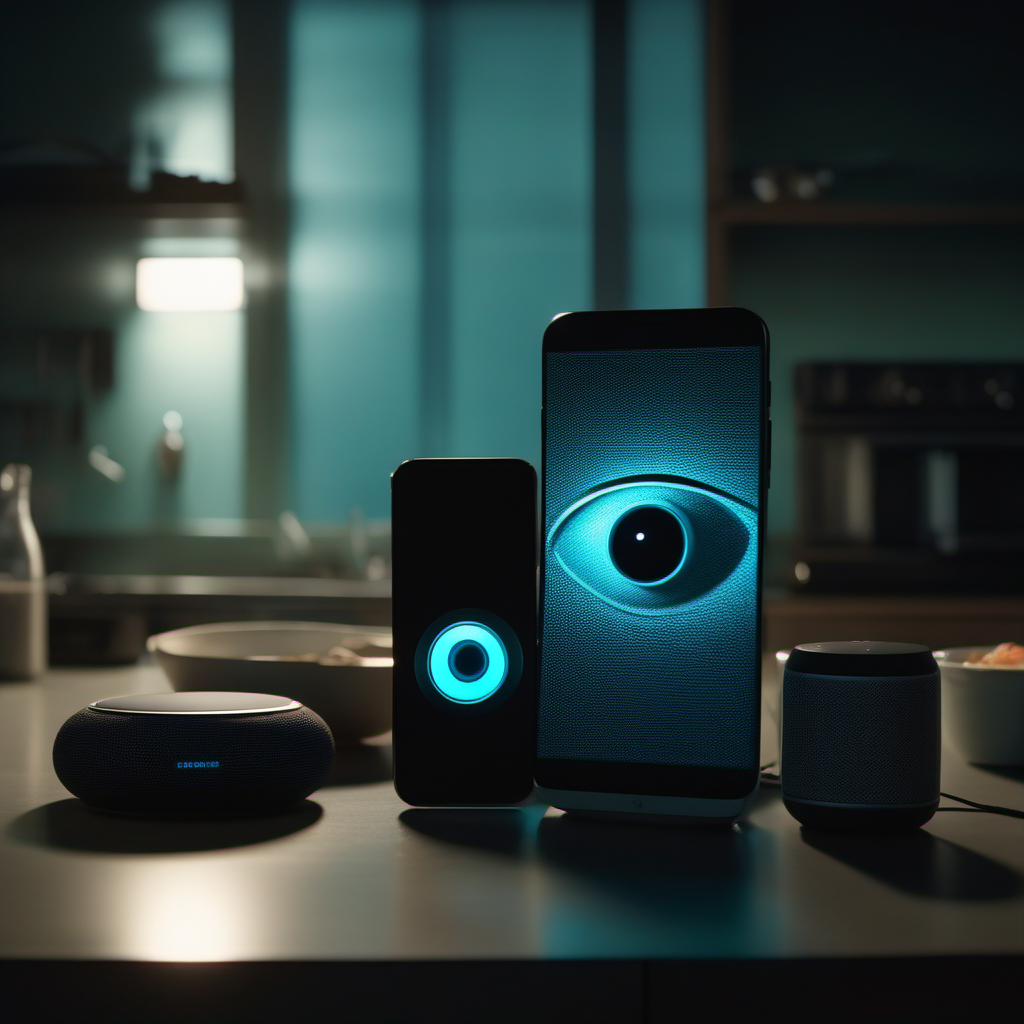
That is the opening scene of The World Is Watching You, Part 3 — the finale of Tucker Carlson's three-part investigation into the surveillance economy. And it gets worse from there.
You signed it away with a thousand clicks
Carlson walks through how we got here, and the receipts are devastating. Pokémon Go collected where you went, when, how long you stayed, and who else was there — and if you signed in with Google, the developer had read-and-write access to your entire Google account. A data broker held 130 pages on one man's Chevy Bolt: 640 trips, start and end times, distances, every hard brake. Progressive knew about a driver's hard braking within 24 hours, before he ever told them. Every commercial laser printer hides invisible tracking dots — the same dots the NSA used to identify Reality Winner and arrest her.
Here is the uncomfortable part Carlson keeps coming back to: no one had to pass a law to take your privacy. Nobody needed a warrant. Nobody broke into your home.
All they needed was your so-called consent — and you gave it, unwittingly, every time you clicked "I agree."
The patents are already filed
The most disturbing section of the episode documents what is coming, straight from the patent filings:
- Apple — a 2023 patent describing AirPods not as headphones but as "biosensing signal devices" that monitor brain activity through electrodes on the scalp.
- Amazon — patents to track warehouse workers' hands, and to analyze Alexa users' real-time emotions — happiness, anger, fear, boredom — then auction ad slots based on your emotional state.
- Facebook — a patent titled "Techniques for Emotion Detection and Content Delivery" that reads your facial expressions through your phone's front camera to drive content that gets reactions from you.
- Microsoft — a global patent to use your body activity — brainwaves, body heat — as proof-of-work for cryptocurrency mining. Your subconscious becomes an asset they monetize.
- Wells Fargo — a 2022 patent for "smart dust": sub-millimeter sensors, small enough to be suspended in the air, that capture audio, optical, temperature, pressure, and biometric data. It was originally a DARPA military concept. Berkeley's follow-on, StimDust, was implanted in a live rodent and used to control its leg muscles.
"Today the world is watching you," Carlson says. "Tomorrow the world could be controlling you like a video game character."
The Fourth Amendment was outsourced
The episode's central argument is that the government did not need to break the Fourth Amendment — it simply outsourced surveillance to companies, then bought the data back. The Electronic Frontier Foundation documents that ICE, CBP, and the FBI have purchased location data from brokers whose sources include real-time ad bidding. The government has bought flight data and cell-phone locations to track people. The Wall Street Journal described the system as "Big Brother in Law" in 2001. Snowden revealed the NSA's OpticNerve operation hacked the webcams of Yahoo users every five minutes, collecting images of nearly two million people.
And the law? The 1986 privacy act was never comprehensively updated. The Patriot Act expanded surveillance. A bipartisan 2022 privacy bill was killed by a single senator and never reached a floor vote. The United States has no federal law protecting your online privacy. Meanwhile, a 2021 infrastructure bill requires infrared cameras and sensors in every new vehicle — a constant biometric assessment of your alertness, your eye movement, your pupil dilation, starting next year.
Why this matters to us
Carlson's closing line is the one that should stick: "No privacy means no freedom."
This is not an abstract argument. We are living through what happens when the state's surveillance machinery is pointed at citizens — when your devices, your data, and your associations become the case against you. The same apparatus that tracked a teacher's joke to the FBI is the apparatus that watches, records, and catalogs everyone who questions the system.
Watch it yourself
The full three-part series is available now at TuckerCarlson.com. It's behind a "pay wall", which means you have to subscribe to T. Carlson. But it is worth it! Do it for a month. Watch the finale at a minimum: the patents, the purchases, the pattern. It is the most complete picture of the surveillance economy we have seen on a major platform, and it deserves to be seen widely.
Watch the trailer: The World is Watching You
Watch the full episode: The World Is Watching You: The Coming Technological Dystopia — Ep 3